
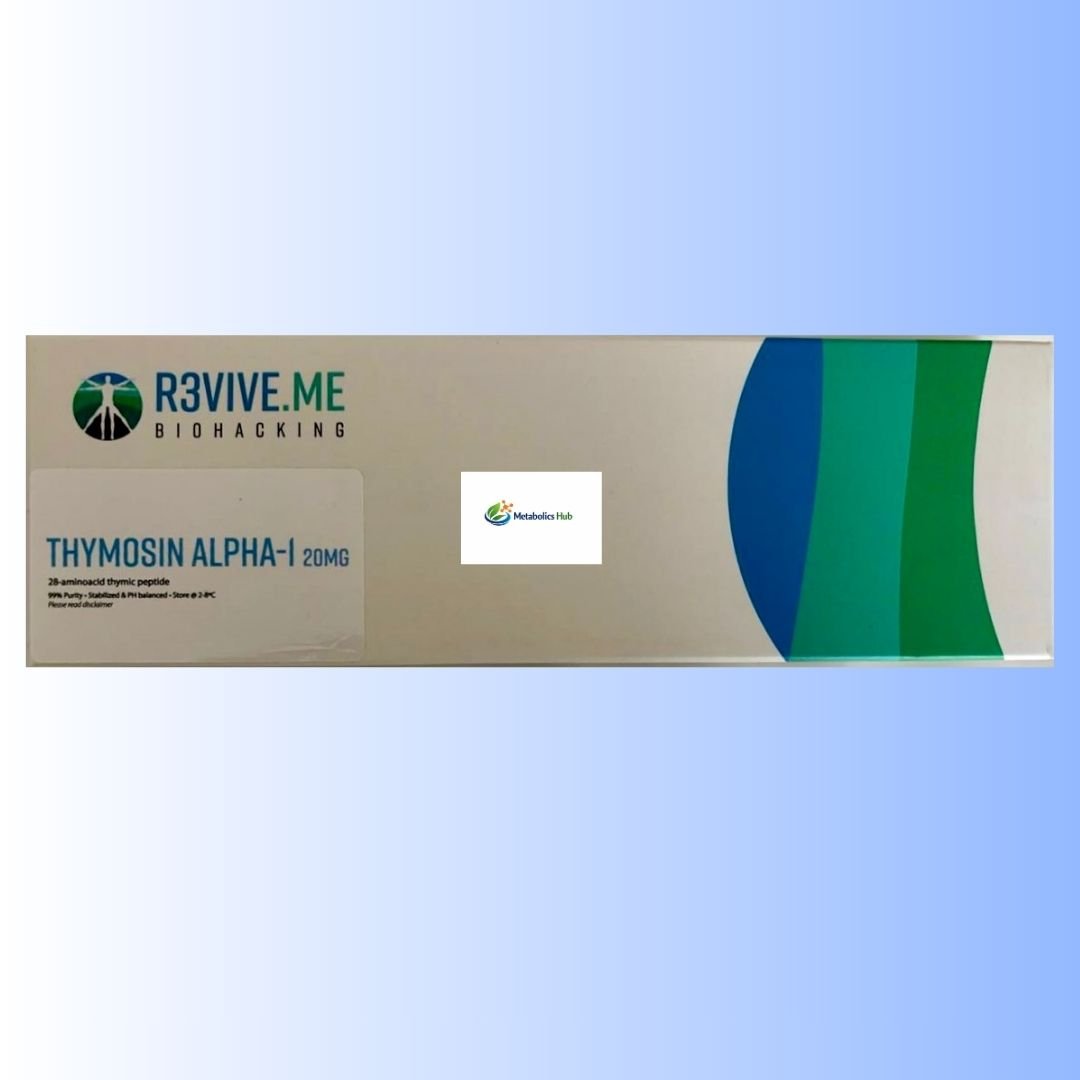
R3VIVE.ME Thymosin Alpha-1 20mg Pen: UK Research Guide
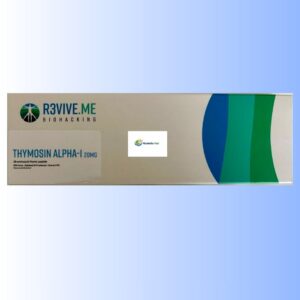
R3VIVE.ME Thymosin Alpha-1 20mg Pen is a product associated with Thymosin Alpha-1 (Tα1), a synthetic peptide derived from a naturally occurring thymic peptide. Thymosin Alpha-1 has attracted scientific interest because of its potential immunomodulatory properties and has been investigated in areas including infectious disease, immune function and cancer-supportive research.
For people researching R3VIVE.ME Thymosin Alpha-1 20mg Pen in the UK, it is important to understand what Tα1 is, what researchers have investigated, the current evidence base and the distinction between an experimental peptide product and an authorised medicine.
What Is R3VIVE.ME Thymosin Alpha-1 20mg Pen?
R3VIVE.ME Thymosin Alpha-1 20mg Pen refers to a product marketed around Thymosin Alpha-1. The stated 20mg quantity identifies the amount associated with the product and should not automatically be interpreted as a clinically recommended dose or treatment schedule.
Thymosin Alpha-1, also known as thymalfasin, is a synthetic peptide that has been investigated for its effects on immune-system signalling. Research has examined its ability to influence innate and adaptive immune responses, making it an area of continuing scientific interest.
A 2024 review examined more than 30 clinical trials involving over 11,000 human participants and concluded that Tα1 has been investigated across a broad range of clinical settings. However, individual studies and indications vary considerably, meaning results from one condition should not automatically be applied to another.
How Does Thymosin Alpha-1 Work?
Thymosin Alpha-1 is generally described as an immunomodulatory peptide. Rather than acting like a conventional antibiotic or directly destroying pathogens, research has focused on how it may influence immune-cell activity and immune signalling.
The peptide has been investigated in relation to both innate and adaptive immune responses. This has generated interest among researchers studying conditions in which immune regulation plays an important role.
However, the precise clinical significance of these mechanisms remains an area of research. Biological activity observed in laboratory experiments does not necessarily establish that a particular product will provide a measurable clinical benefit in humans.
Thymosin Alpha-1 and Immune Research
One of the major areas of interest surrounding Tα1 is immune modulation.
Researchers have studied Thymosin Alpha-1 in infectious diseases and other conditions where immune responses may become impaired or dysregulated. Clinical trials have produced varying results depending on the disease, patient population, treatment combination and study design.
For example, a systematic review and meta-analysis examining Tα1 in adults with COVID-19 found no statistically significant overall reduction in mortality, while some subgroup findings suggested possible differences in specific populations. The authors concluded that the available evidence did not support routine use for hospitalised adults with COVID-19.
This illustrates why Tα1 research should be interpreted carefully rather than converted into broad claims about immune enhancement.
Thymosin Alpha-1 and Sepsis Research
Sepsis has also been an important area of Thymosin Alpha-1 research.
A 2025 systematic review and meta-analysis identified 11 randomised controlled trials involving nearly 2,000 participants. Although the overall analysis suggested a possible reduction in 28-day mortality, analyses restricted to higher-quality and multicentre studies did not demonstrate a statistically significant mortality benefit. The researchers concluded that further evidence is required.
These findings demonstrate both the scientific interest in Tα1 and the importance of distinguishing promising research signals from established medical treatment.
Thymosin Alpha-1 and Cancer Research
Tα1 has also been investigated as an adjunctive immunomodulatory approach in cancer research.
A 2026 scoping review identified clinical studies examining Thymosin Alpha-1 alongside treatments such as chemotherapy, radiotherapy, targeted therapies and immune checkpoint inhibitors. The review found that most studies were conducted in China and that study designs, treatment settings and outcomes varied substantially. It concluded that prospective controlled studies with consistent methods and systematic safety reporting are still needed.
Therefore, R3VIVE.ME Thymosin Alpha-1 20mg Pen should not be marketed as a cancer treatment or described as proven to prevent or cure cancer.
Is Thymosin Alpha-1 Approved in the UK?
UK regulatory status should always be verified for the specific product, rather than inferred from scientific literature or online product descriptions.
The Medicines and Healthcare products Regulatory Agency (MHRA) oversees the regulation of medicines in the UK. Products intended to be investigated in UK clinical trials are subject to specific regulatory requirements, including MHRA processes for clinical-trial approval. Current UK clinical-trial regulations took effect in their amended form on 28 April 2026.
Consequently, R3VIVE.ME Thymosin Alpha-1 20mg Pen should not automatically be described as an MHRA-authorised medicine without independent verification of the specific product and its regulatory status.
Product Quality and Authenticity
When researching R3VIVE.ME Thymosin Alpha-1 20mg Pen, product documentation should be considered carefully. Relevant information may include the manufacturer’s identity, stated peptide, batch number, expiry information, analytical testing and storage requirements.
A laboratory certificate may provide information about the tested sample, but it does not by itself establish clinical effectiveness or UK marketing authorisation.
Websites should also avoid unsupported statements such as guaranteed immune enhancement, disease prevention or treatment claims.
Safety and Responsible Research
Thymosin Alpha-1 is pharmacologically active and should not be treated as an ordinary nutritional supplement. Although clinical studies have investigated its safety, the safety profile and appropriate use can depend on the medical condition, treatment combination and individual patient characteristics.
Anyone considering an experimental or unlicensed peptide for a health condition should discuss the matter with an appropriately qualified healthcare professional. Research articles should not be used as substitutes for individual medical advice or prescribing information.
Frequently Asked Questions
What is R3VIVE.ME Thymosin Alpha-1 20mg Pen?
It is a product associated with Thymosin Alpha-1, a synthetic immunomodulatory peptide studied in several clinical research areas.
What is Thymosin Alpha-1 also called?
It is commonly referred to as Tα1 or thymalfasin.
What has Thymosin Alpha-1 been researched for?
Research has included infectious diseases, sepsis, cancer-supportive care and immune-system modulation.
Is Thymosin Alpha-1 a proven immune booster?
Broad claims that it is a proven immune booster are not supported by sufficiently consistent clinical evidence across all conditions.
Is R3VIVE.ME Thymosin Alpha-1 20mg Pen MHRA approved?
The specific product’s UK regulatory status should be independently verified rather than assumed from its name or the existence of clinical research involving Tα1.
Final Thoughts
R3VIVE.ME Thymosin Alpha-1 20mg Pen relates to Thymosin Alpha-1, a peptide that has generated considerable scientific interest because of its potential immunomodulatory effects. Research has examined Tα1 across infectious disease, sepsis and cancer-supportive settings, but results vary between clinical populations and indications.
For UK audiences, accurate SEO content should distinguish scientific research from established medical indications and avoid presenting an individual peptide product as an approved treatment without appropriate regulatory evidence. Clear product information, responsible wording and reference to current UK regulatory requirements can make the page more credible and useful to readers.