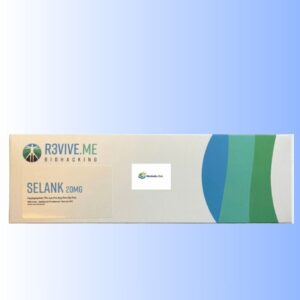

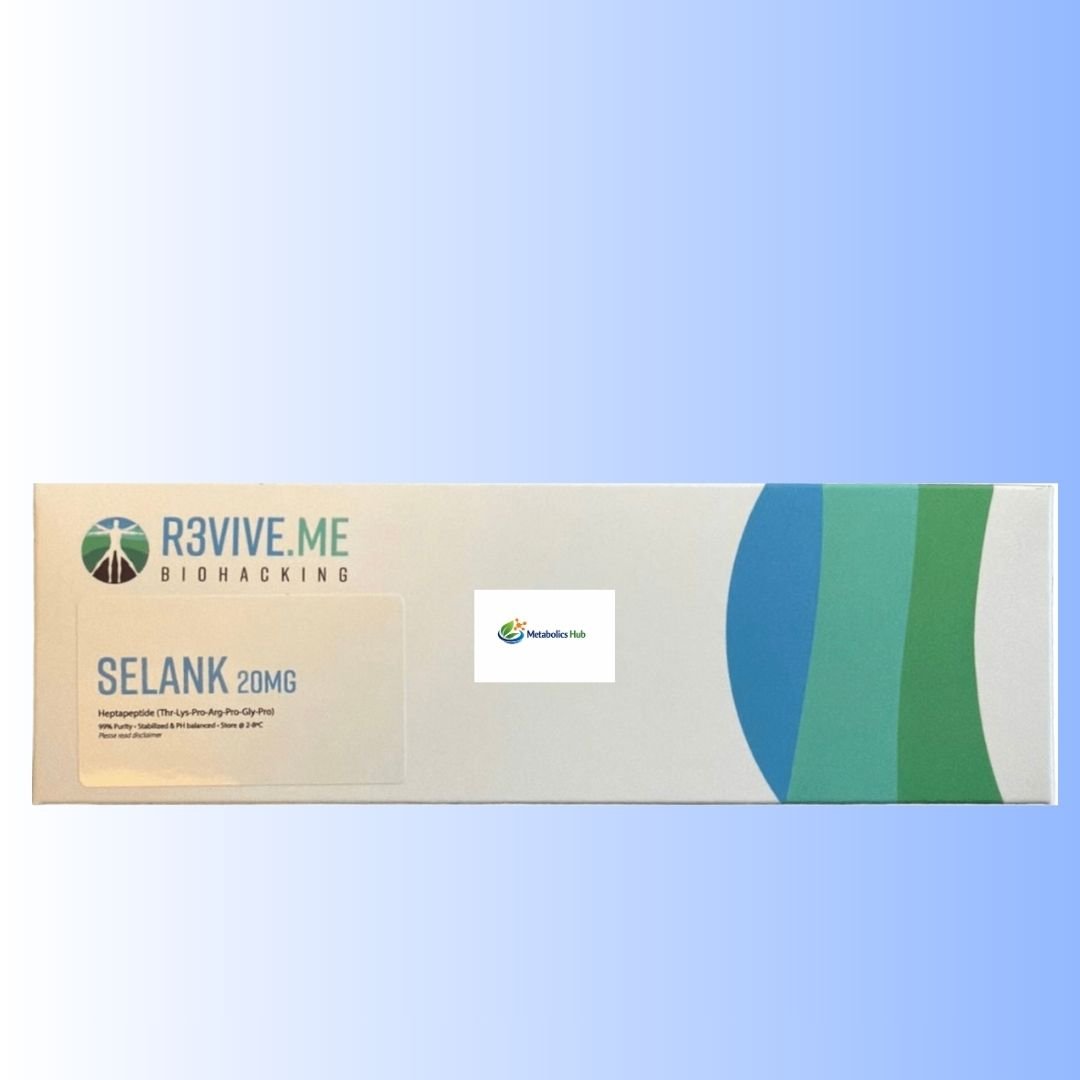
R3VIVE.ME Selank 20mg: UK Research & Information Guide
R3VIVE.ME Selank 20mg is a product associated with Selank, a synthetic peptide that has attracted scientific interest because of its reported effects on neurobiological and immune-related pathways. Selank was originally developed and studied in Russia, with research focusing particularly on anxiety-related behaviour, stress responses and neurotransmitter activity.
For people researching R3VIVE.ME Selank 20mg in the UK, it is important to distinguish between scientific research and established medical treatment. Selank should not automatically be described as an approved medicine, anxiety treatment or general wellness product. The regulatory status of a specific product must always be verified independently.
What Is R3VIVE.ME Selank 20mg?
R3VIVE.ME Selank 20mg refers to a product marketed around Selank, a synthetic peptide analogue derived from a naturally occurring peptide sequence. The stated 20mg quantity identifies the amount associated with the product and should not be interpreted as an established human dose.
Research into Selank has explored its potential effects on the central nervous system, including pathways associated with stress, anxiety, cognition and emotional responses. Scientific interest has also extended to the interaction between the nervous system and immune regulation.
However, the amount of published evidence available for Selank is considerably smaller than the evidence supporting established prescription medicines used to treat anxiety or other mental-health conditions.
What Is Selank?
Selank is a synthetic peptide that has been investigated for potential anxiolytic and neurobiological activity. Early research explored whether Selank could influence behavioural responses associated with anxiety and stress.
Unlike conventional medicines that target a single well-established receptor pathway, the proposed biological actions of Selank are more complex. Experimental research has investigated possible effects involving neurotransmitter systems, gene expression and immune-related signalling.
These mechanisms remain an area of scientific investigation. Laboratory findings should therefore not be interpreted as proof that Selank provides a particular clinical benefit to every individual.
Selank and Anxiety Research
One of the most frequently discussed areas of Selank research is anxiety-related behaviour.
Early Russian studies investigated Selank in people experiencing anxiety and related symptoms. Some reports described potential anxiolytic effects without the same type of sedation associated with certain conventional medicines. However, much of the available clinical literature is relatively limited and does not provide the extensive evidence base expected for widely established medicines.
For UK readers, this distinction is particularly important. A compound being investigated for anxiety does not mean it is an approved treatment for anxiety disorders.
Anyone experiencing persistent anxiety, panic, low mood or other mental-health symptoms should seek assessment from an appropriately qualified healthcare professional rather than relying on an experimental peptide.
Selank and Neurotransmitter Research
Research has explored possible relationships between Selank and neurotransmitter systems involved in emotional regulation and neurological function.
Experimental studies have investigated pathways involving serotonin, dopamine, GABA-related signalling and other neurochemical processes. These findings have contributed to scientific interest in Selank as a research compound.
However, the existence of a proposed mechanism does not establish clinical effectiveness. Additional controlled human research would be required to determine whether these biological observations translate into meaningful and reproducible medical benefits.
Selank and Cognitive Research
Another area of interest is cognitive function.
Preclinical research has examined whether Selank may influence learning, memory, attention and stress-related changes in behaviour. These investigations have contributed to the broader study of peptide-based approaches to neurological research.
It is important, however, to avoid describing Selank as a proven nootropic or cognitive-enhancement treatment. Evidence from experimental models cannot establish that an individual using a commercial Selank product will experience improved concentration, memory or productivity.
Selank and Immune Research
Selank has also attracted interest because of potential interactions between neurological and immune pathways.
Researchers have investigated whether the peptide may influence cytokine activity and other components of immune signalling. This is part of a broader scientific field examining the relationship between the nervous system, stress and immune function.
These findings are scientifically interesting but remain insufficient to support broad claims that Selank can prevent infections, strengthen immunity or treat immune disorders.
Is R3VIVE.ME Selank 20mg Approved in the UK?
The regulatory status of a specific Selank product should be verified before it is described as a UK medicine.
The Medicines and Healthcare products Regulatory Agency (MHRA) provides an official service where healthcare professionals and members of the public can search for medicine information, including patient information leaflets, summaries of product characteristics and public assessment reports.
UK rules also place restrictions on the advertising and promotion of medicines. The MHRA states that medicines that are not licensed by the appropriate UK regulator cannot be advertised to the public as medicines.
Therefore, R3VIVE.ME Selank 20mg should not automatically be described as an MHRA-approved medicine based solely on its product name or research literature.
Product Quality and Authenticity
When researching R3VIVE.ME Selank 20mg, product documentation should be examined carefully. Relevant information may include the manufacturer’s identity, stated ingredients, batch information, expiry details, storage requirements and analytical testing.
A certificate of analysis may provide information about the tested sample, but laboratory documentation does not by itself establish that a product has been clinically evaluated or authorised as a medicine in the UK.
Websites should also avoid guaranteed claims concerning anxiety relief, mood improvement, sleep, memory or cognitive performance.
Safety and Responsible Research
Because Selank is an experimental peptide, its long-term safety profile and clinical effectiveness are not established to the same standard as those of authorised medicines with extensive regulatory data.
People experiencing anxiety, depression, insomnia or other persistent symptoms should seek professional medical advice. Experimental compounds should not replace established diagnosis or treatment.
Product information should also never be used as a substitute for professional prescribing advice.
Frequently Asked Questions
What is R3VIVE.ME Selank 20mg?
It is a product associated with Selank, a synthetic peptide studied for potential neurobiological, anxiety-related and immune-signalling effects.
What is Selank researched for?
Research has examined anxiety-related behaviour, stress responses, cognitive processes, neurotransmitter pathways and immune signalling.
Is Selank an approved UK anxiety medicine?
The specific product should not be described as an MHRA-authorised anxiety medicine without verified UK marketing authorisation.
Is Selank a peptide?
Yes. Selank is a synthetic peptide that has been investigated in experimental and clinical research.
Can Selank replace prescribed anxiety medication?
No. An experimental peptide should not be treated as a substitute for an appropriately prescribed and monitored medicine.
Final Thoughts
R3VIVE.ME Selank 20mg relates to Selank, an experimental peptide that has generated scientific interest in neurological, stress-related and immune research. Although early research has produced interesting findings, the available evidence does not justify presenting Selank as a universally proven treatment for anxiety, cognitive problems, sleep disorders or immune conditions.
For UK audiences, the most credible approach is to provide transparent product information, distinguish research findings from established clinical evidence and clearly explain the importance of UK regulatory status. The MHRA remains the appropriate source for checking authorised medicine information.